Sheet 1
6 questions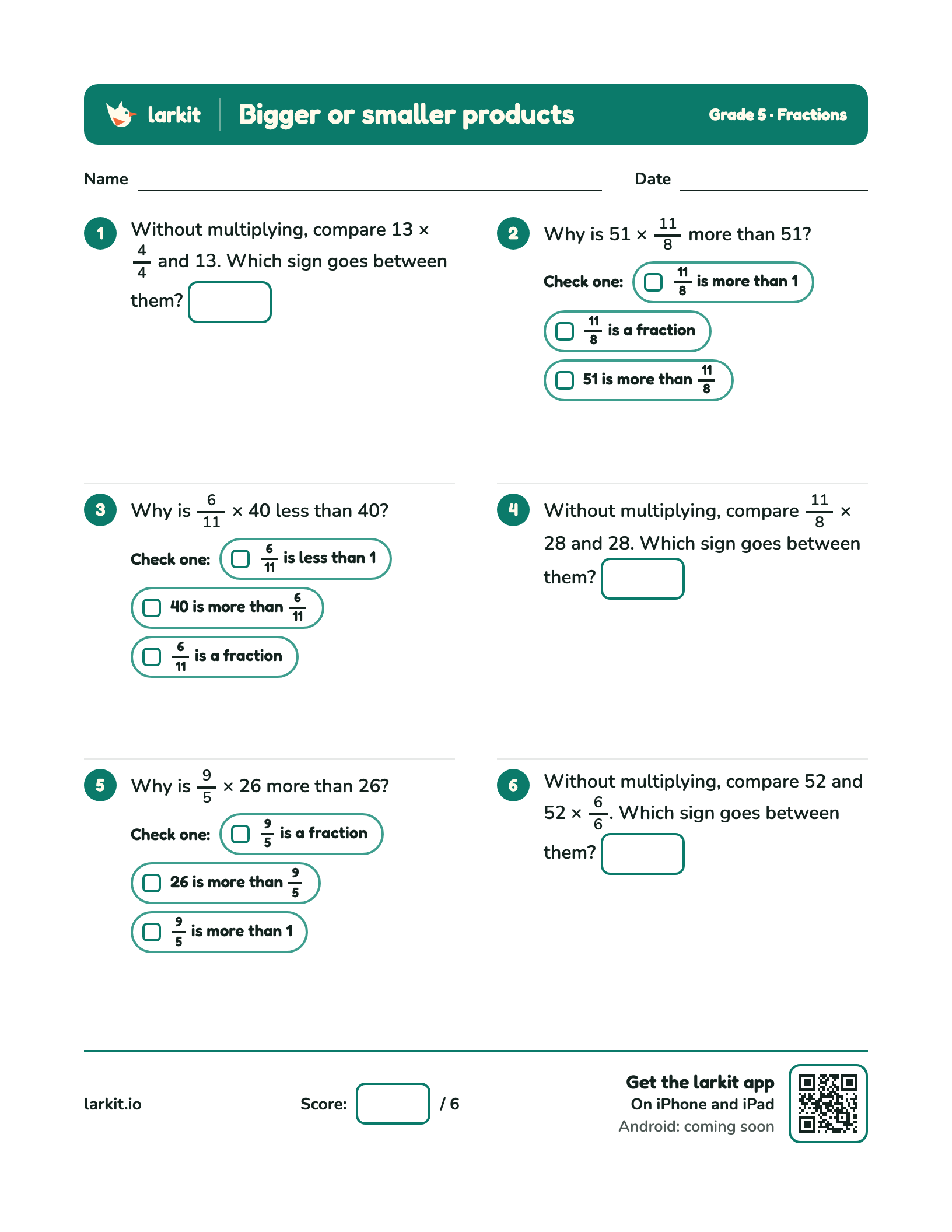
Free 5th grade worksheets
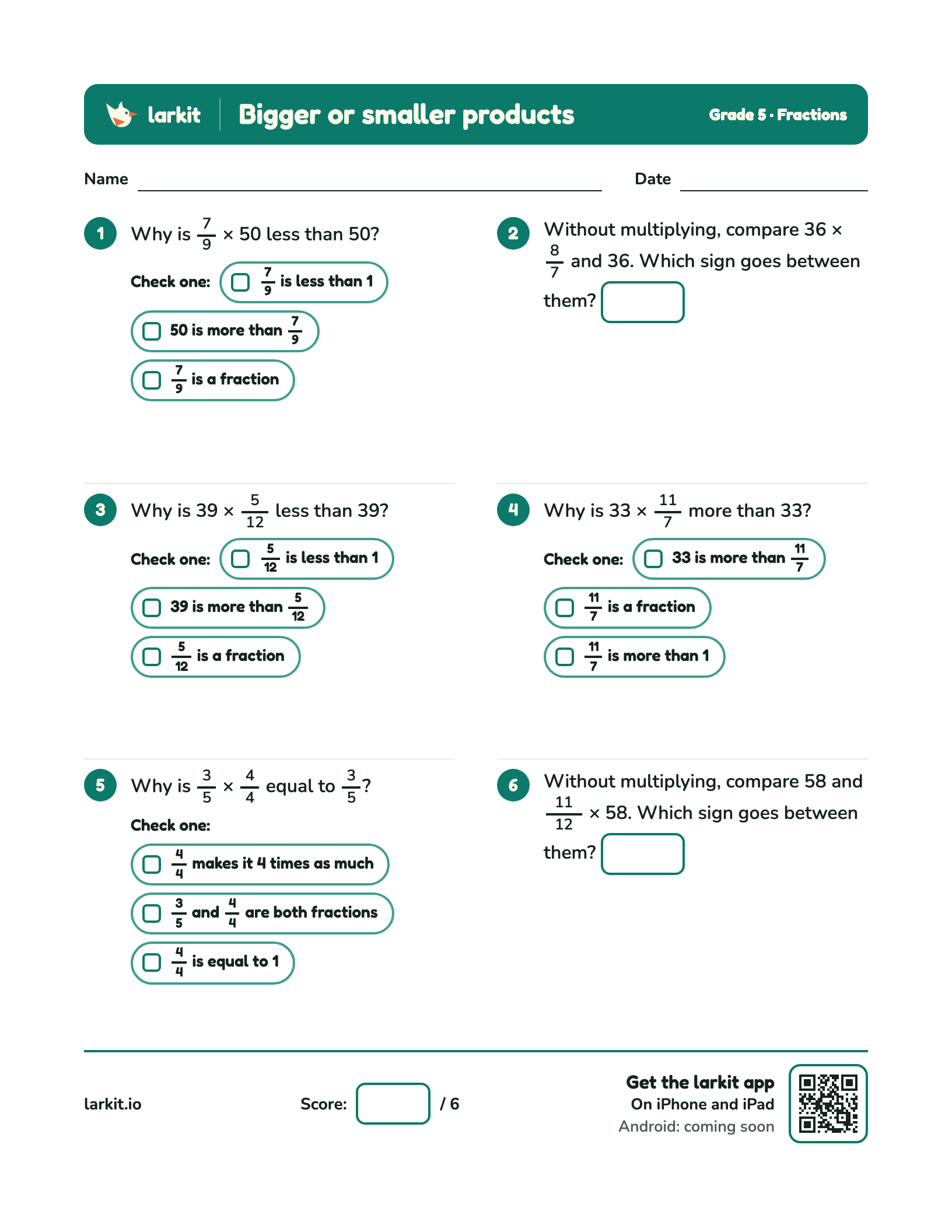
2 printable PDFs, each with its answer key. Multiplication as scaling: telling whether a product is more, less or the same as a number without multiplying.
Worksheet maker
With larkit Premium you make new sheets for any skill, as many as you like, each with its answer key.
Without multiplying, check the box where a product could land on the line. Two more free sheets with number lines, each with its answer key.
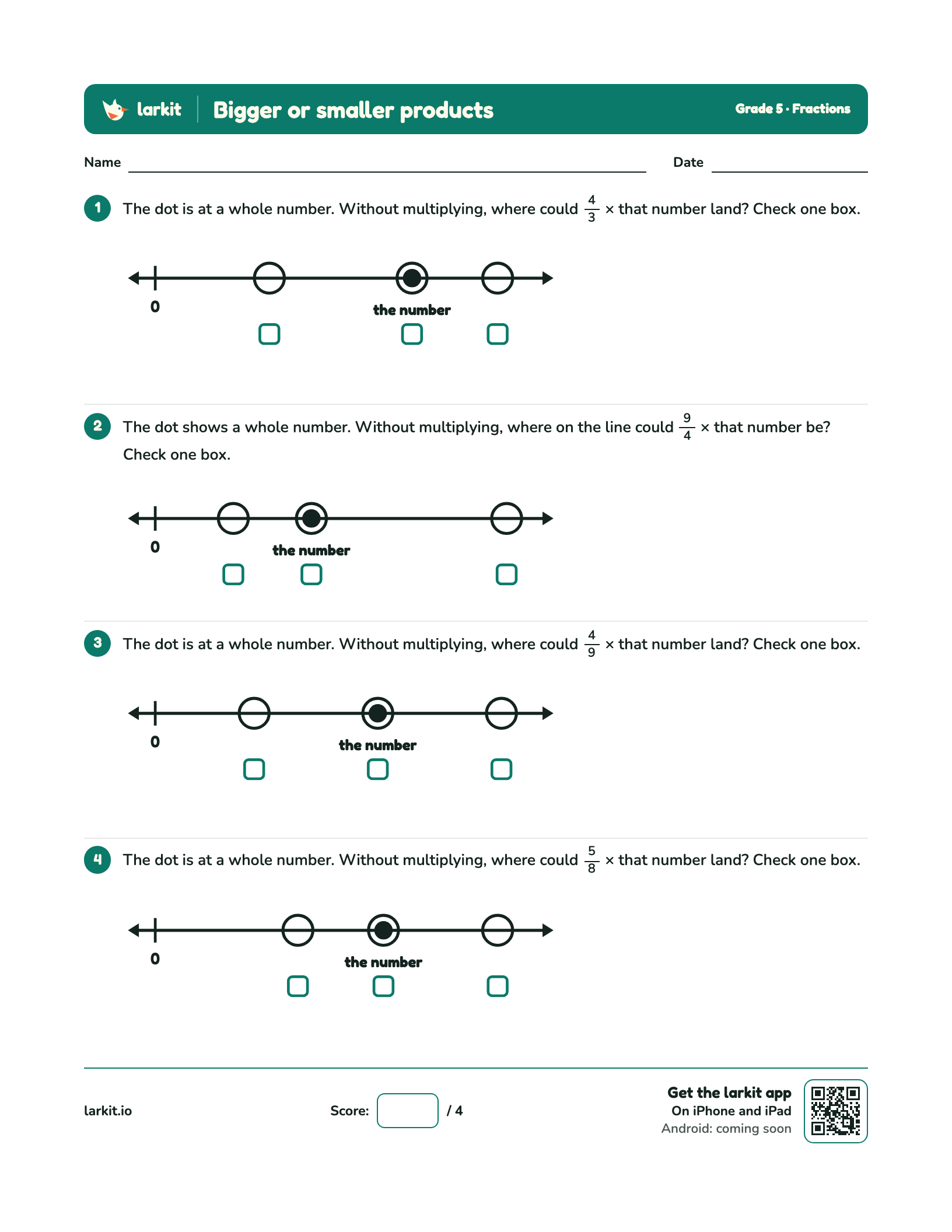
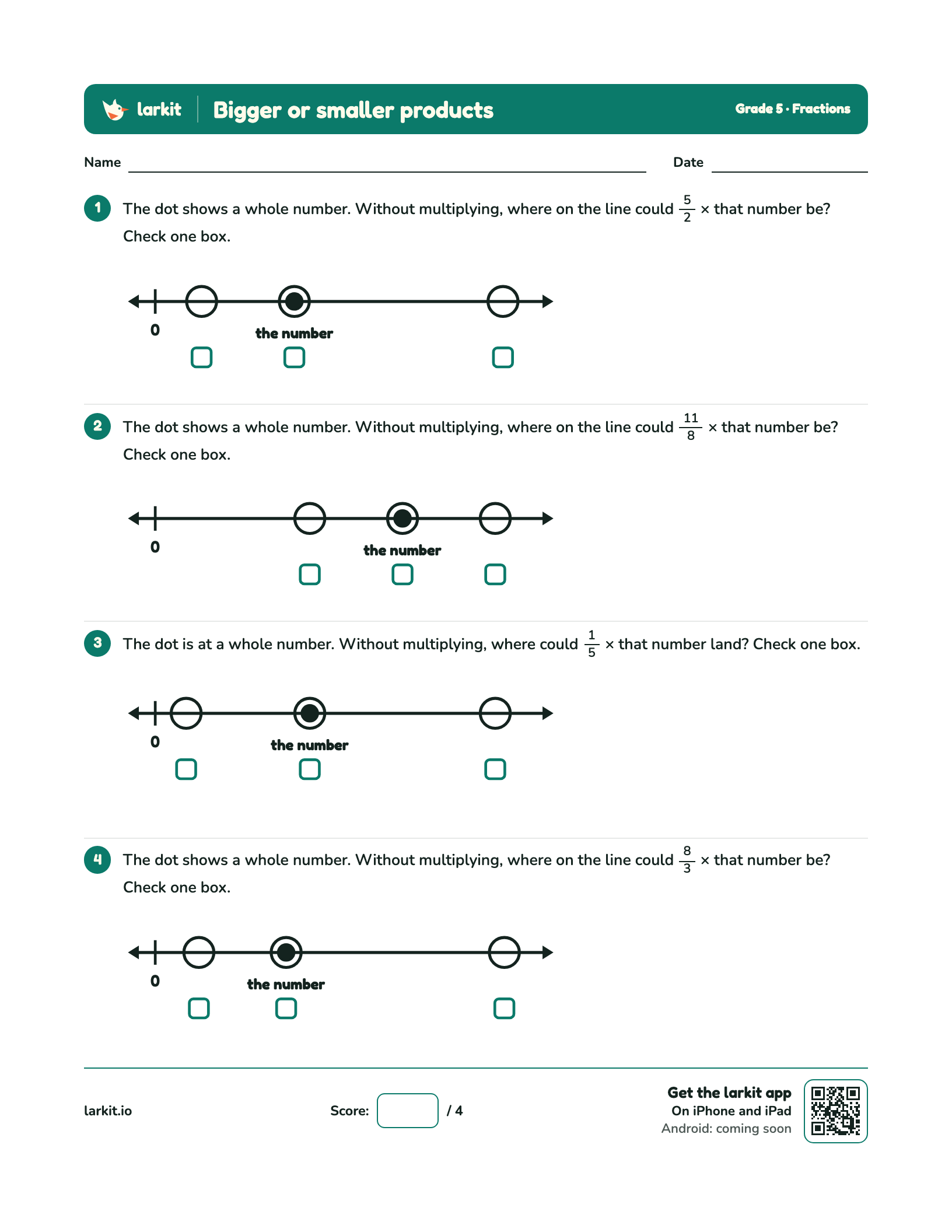
6 questions on US Letter paper, with a box for the score. Some from sheet 1:
Multiply by a fraction greater than 1 and a number gets bigger. Multiply by a fraction less than 1 and it gets smaller, and a fraction equal to 1 leaves it the same. Fifth graders use this on pairs like 13 × 4/4 and 13, and explain why a product like 51 × 11/8 is more than 51.
Plenty of children believe multiplying always makes a number bigger, so 6/11 × 40 seems more than 40. Some also don't yet recognize 4/4 or 6/6 as 1.
Talk about recipes. Making 3/4 of a recipe means less of everything, and making 1 1/2 times the recipe means more. Ask, "Is 7/9 more or less than 1? So is 7/9 of 50 more or less than 50?" No working out needed.